I’ve been noticing lately how often we ask people in schools to be resilient without ever talking about what resilience requirements the system is asking of us.
Resilience shows up as a personal trait– something students and educators are expected to muster up when conditions get hard. I hear it in classrooms, coaching conversations, and leadership meetings, usually offered as encouragement slogans when something isn’t working as planned.
But underneath that language is a quieter question I can’t stop coming back to: what happens when resilience becomes something individuals are expected to carry, instead of something systems are designed to support?
My school is currently in a system transition– new administrators, new coaches, new, new, new. Not being in the classroom allows me the space to notice our system as it ebbs, bends, and gets close to a breaking point. I’m noticing the effect these shifts have on the staff and faculty, including the administration, as pressure and expectations build around us.
I’m sure we’re not alone– every school I’ve been in has been like this especially this time of year. (Ever hear of DEVOLSON–> Dark Evil Vortex of Late September, October, November?)
As the years go on, its becoming more and more apparent that these ebbs and flows of stress are increasing their baseline. In my own experience, in coaching conversations, in looks in the hallway, it’s trending that each year we are asked to lift our baseline of resilience.
There is no shortage of encouragement– we all have emails from education subscriptions telling us the same message posted on our teacher lounge walls. But this encouragement furthers the idea that we are resilient in ourselves– this is an individual burden to carry.
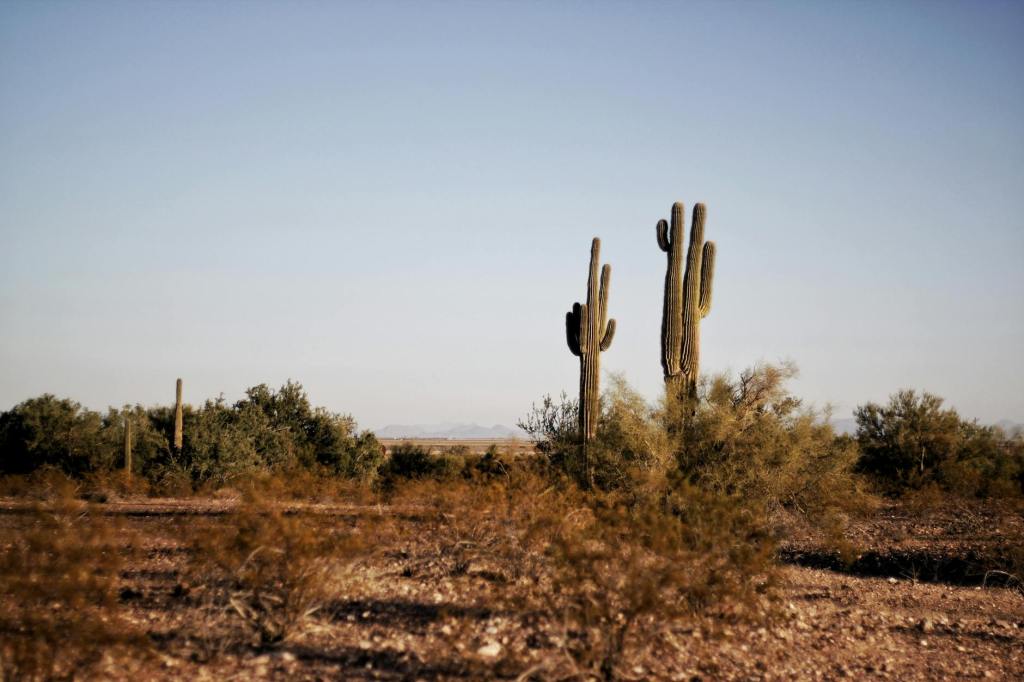
Living and working in the desert has changed the way I think about resilience. Out here, things don’t survive by pushing harder; they survive by being built differently.
Saguaros, our iconic cactus, are systematically built to survive. These desert stems (see what I did there?) have ribs expand and contract to allow the flesh to hold a surplus of water for dry spells. They also prevent the cactus from bursting when there is too much rain to hold. That flexibility isn’t a response to crisis– it’s built in from the start. The stem system assumes variability, scarcity, and uneven conditions, and it’s designed to hold them without breaking.
Young plants have a different approach- they work with Nurse Plants, borrowing their shade and stability to survive the heat of summer. Without that shared structure, survival is unlikely. Over time, the younger plant becomes more independent, but its early growth depends on a system that was already adapted to the environment. Resilience, here, isn’t about enduring hardship alone– it’s about being supported by designs and systems that make growth possible.
In schools, we often skip this kind of system design work. We notice strain and respond by asking people to cope better– be more flexible, try harder, stay positive– without changing the structures creating the strain in the first place. When time is tight, support is uneven, or expectations keep shifting, resilience becomes a personal requirement instead of a shared, system responsibility. We rarely pause to ask whether our schedules, pacing, professional learning, or support systems are actually built to hold the ebbs and flows we know exist.
Instead of redesigning the stem, we ask the plant to bend more.
When we talk about resilience without talking about design, we shift the burden onto individuals. We ask students, teachers, and leaders to bend more, adapt faster, and carry what the system hasn’t been built to hold.
But resilience isn’t neutral, and it isn’t accidental. It shows up– or it doesn’t–based on the choices we make about structures, time, support, and expectations.
If we want true and sustainable resilience in our learning communities, we have to stop treating it like a personal responsibility and start treating it like a systems design responsibility.

 Desert STEM Musings
Leave a comment