During grad school, a common activity we would use to sharpen our discernment was a game I like to call “is it rigorous or is it pretty?”. We would choose an activity from Teachers Pay Teachers and decide if the content was a rigorous assessment and practice of standards mastery or if it was just polished and pretty. If it was deemed just pretty, we would then do the work to figure out what was needed to elevate the learning and redesign the task.
I find myself thinking about this game when I see classrooms using Vertical Non-Permanent Surfaces (VNPSs).
At a conference here in Arizona, Peter Liljidahl referred to VNPSs as the “sexy one” among the 14 Building Thinking Classrooms practices– the move that most visibly signals a shift in how a classroom operates. Their presence immediately communicates: students won’t be sitting at desks facing the teacher. In this room, learning looks different.
But is this difference at the core of the design, or is it merely décor?
The Origins
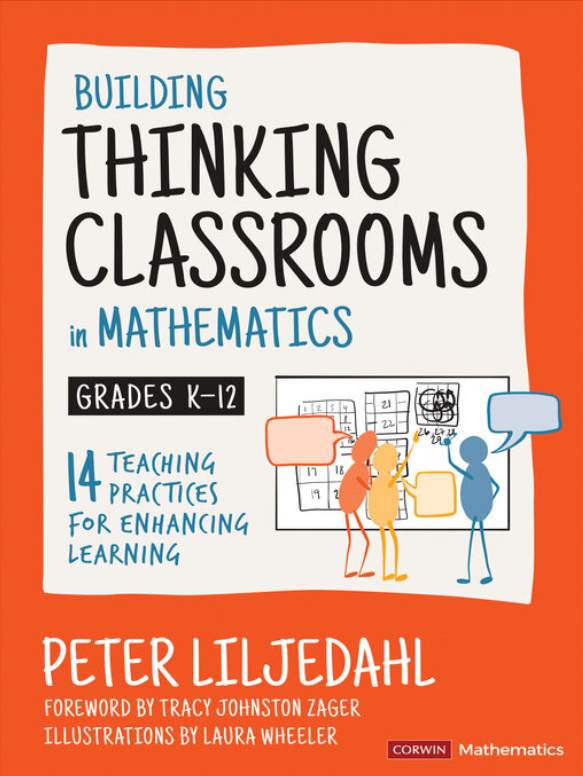
I, and many others, first heard of the term VNPSs from Peter Liljidahl’s book Building Thinking Classrooms.
Liljidahl’s team set out to figure out what our math classrooms are missing and came across room after room where students are not required to think. From this realization and years of research, they identified with 14 classroom practices that are designed to increase cognitive engagement and collaboration.
These practices are organized into toolkits with an intentional rollout sequence, emphasizing not just what to implement, but when and why each shift matters– underscoring that no single move was designed to stand on its own. When that context gets stripped away, however, it becomes easy for one highly visible, “sexy” practice to be lifted out and celebrated as innovation, even while the underlying learning and pedagogical design remains largely unchanged.
So what were VNPSs designed to do?
Vertical non-permanent surfaces, such a as whiteboards, chalkboards, or windows, are a tool to increase the visibility and collaboration in a thinking classroom. Compared to other writing surfaces, Liljidahl’s team found that students working in groups at VNPSs were:
- more likely to stay on task
- quicker and more eager to begin a task
- more likely to persevere
- more likely to discuss the task with peers
- mobilizing knowledge across groups
By using this tool, teachers are better able to elicit student thinking for use in instruction, as VNPSs remove barriers to displaying ideas. But the point is not thinking for thinking’s sake. If student thinking is surfaced and then left untouched, the instructional design remains unchanged.
Whiteboards do not transform classrooms. The teacher moves before, during, and after their use do.
The question, then, isn’t whether VNPSs “work.” It’s whether we’ve designed classrooms where the thinking they reveal– or don’t reveal– is actually used.
Before the Boards
“If we want our students to think, we need to give them something to think about—something that will not only require thinking but also encourage thinking.”
– Peter Liljidahl
Before students ever stand up, the groundwork for thinking has already been laid. This is where I find Smith and Stein’s work especially clarifying. Their framework, 5 Practices for Orchestrating Productive Mathematics Discussions, centers on the use of meaningful tasks, clear learning goals, and thoughtful anticipation of how students might respond. When that anticipation is present, what unfolds at the boards feels less reactive and more connected to the learning the lesson is meant to support.
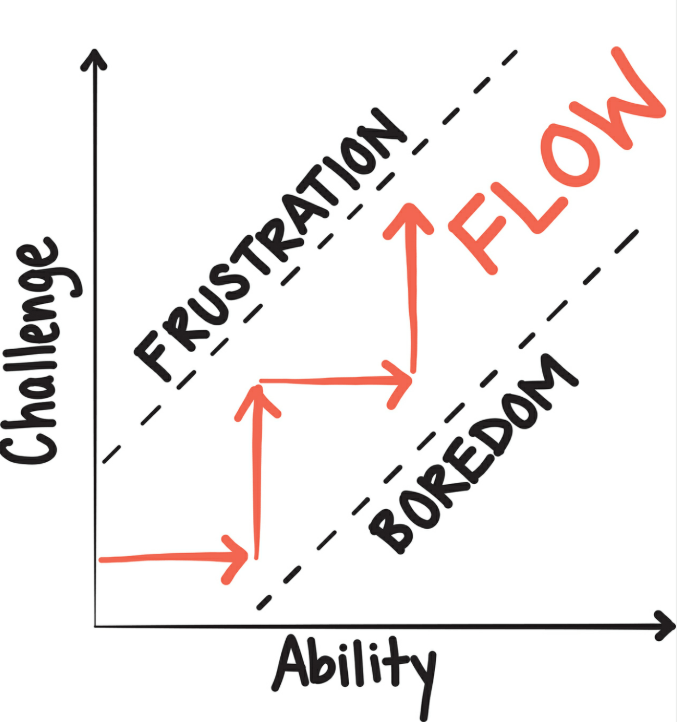
BTC practices emphasize “flow”- where the work is not too hard, not too easy, but still cognitively challenging. Vygotsky described this as the Zone of Proximal Development; others refer to it more simply as work that is “just hard enough.” Whatever you decide to call it, getting students there and keeping them there is where the learning happens.
Anticipating student responses and questions gives teachers the brainspace to circulate, listen, and provide in-the-moment support– helping students stay with the thinking rather than being pulled out of it. The VNPSs don’t create flow, but they help sustain it. Without intentional design beforehand, the boards do little more than elevate a worksheet to the wall. With it, they become a tool for thinking.
During the Boards
While students are at the boards, that carefully planned thinking begins to surface. While keeping students in “flow” this is where the teaching demand grows as well.
Smith and Stein’s practices around monitoring and selecting help me name the shift required here. When students are working publicly, the teacher’s role is no longer to circulate for completion or correctness, but to study thinking in real time. This means listening for ideas that are incomplete, inefficient, or unexpected, and resisting the urge to intervene too quickly or too often.
As we study the boards, use our anticipated questions, and provide in-the-moment support and questioning, this phase also requires us to ask ourselves questions such as:
- Am I listening for ideas, or looking for answers?
- Which student thinking needs to be brought into the whole-class conversation?
- How will I sequence these ideas to promote sensemaking and drive toward our learning goals?
- How do my selections shape what students believe “counts” as good thinking?
It is the concrete, pictorial, and verbal sensemaking that does the real work here– not the boards themselves. The boards simply make that thinking visible.
After the Boards
This is where our professional judgment and expertise matter most. Too often, whiteboard work concludes with a familiar refrain: “Look how many ways we all solved the same problem! All of these strategies are valid.” When student thinking is used only to monitor and display completion rather than to deepen understanding, VNPSs collapse into a worksheet– just vertical. Students have changed position, but the learning itself remains unchanged.
Instead, thoughtful sequencing of work and connections of ideas are what drive sensemaking here. Deep learning comes from when students to see how ideas build on one another to develop a cohesive, conceptual story. Drawing students’ attention to the relationships between strategies– what stays the same, what changes, and why– is when student work shifts from being something to display to something to study. The whiteboard becomes a space for collective sensemaking rather than public performance.
Classroom Environment
I would be doing a disservice if I didn’t acknowledge the equity work required for VNPSs to function as intended.
One common concern is that, in group settings, the work gets divided while the thinking remains isolated– classic divide-and-conquer tasks where little discussion is necessary. In those moments, participation can look equitable while cognition is anything but. Making the boards a site of shared thinking, rather than shared labor, requires a classroom culture where every student is expected– and supported– to think.
Also, teachers also have to make a difficult shift– stepping out of the center of student interactions. This often means loosening the grip on information and resisting the urge to resolve uncertainty too quickly. Allowing students to productively wallow in the muck of their thinking is uncomfortable, but it’s also where sensemaking has room to grow.
Which brings me back, once again, to that question from grad school: Is it rigorous, or is it pretty? VNPSs sit right at that intersection. They can be a powerful support for collective sensemaking– or they can become instructional décor, signaling change without requiring it. The difference isn’t the whiteboards themselves, but the thinking we design for, notice, and use. When we attend to that work, the surface matters. When we don’t, it’s just another place to write.


 Desert STEM Musings
Leave a comment