Lately, I’ve been noticing the phrase “productive struggle” floating through meetings, professional development sessions, and curriculum conversations more and more. It lands confidently. It sounds rigorous. It feels like the right thing to say. I’ve used it myself.
But when I pause and ask what it actually means, the answers shift.
Sometimes it’s described as giving students work before they’ve been taught how to do it. Sometimes Vygotsky is brought up, with diagrams of the Zone of Proximal Development (ZPD) – what I can do alone, what I can do with help, what I cannot yet do. And somewhere along the way, “what I haven’t taught” becomes synonymous with “in the zone.”
I’ve also heard the persistent follow-up statements:
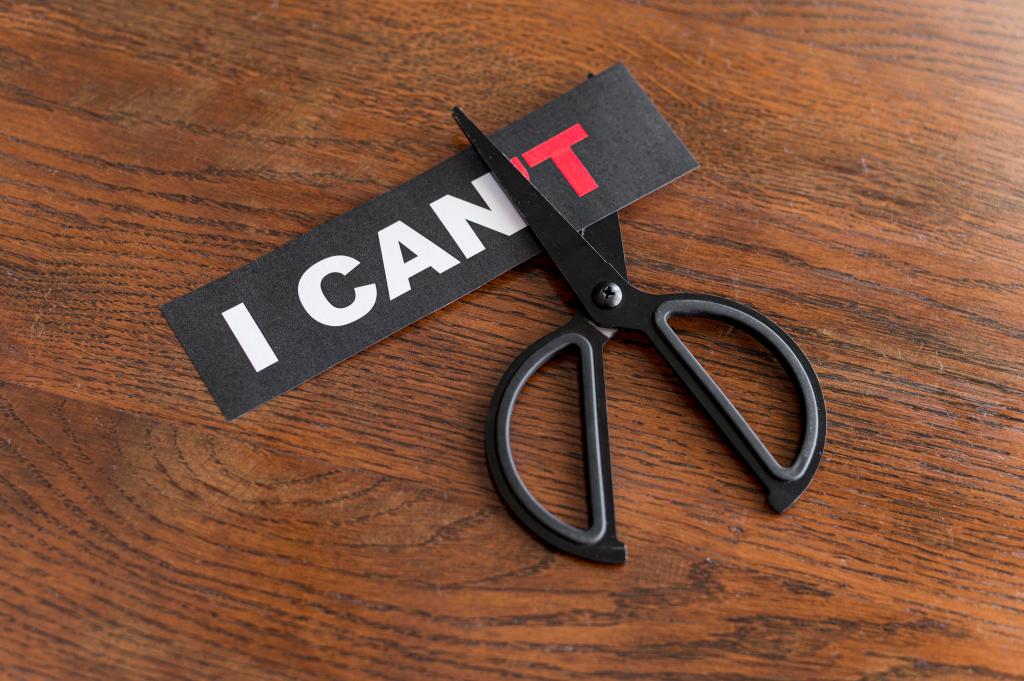
“My students can’t.”
“They won’t.”
“There’s no use.”
And I find myself wondering about those. The words “can’t” and “won’t” allude to something students are given to do- to perform.
When did struggle become something we assign, rather than something we design for?
Current Productive Struggle
In many rooms I’ve been in, and in professional development sessions I’ve sat through “productive struggle” has a predictable rhythm.
It comes after bellwork is done and reviewed and after a bit of direct instruction.
Often the instruction is procedural- a method is modeled and a few guided problems follow. Students sit quietly while the teacher works the problems on the board. Heads nod. Notes are taken. The steps are clear.
Then comes the transition: “Now try these on your own.”
Sometimes the problems are nearly identical to the modeled ones. New numbers plugged into the same steps. Other times, they’re intentionally more difficult or complex. Students are expected to transfer the procedure shown into unfamiliar territory.
What counts as “struggle” changes between these moments. What does not change is the misunderstanding underneath them.
Scene One: Guided Practice to Independent/Group Struggle
This scene is common.
A problem is modeled, steps are listed, students copy the example and take notes.
Then comes the handoff: “Now your turn.”
The practice problems mirror the guided examples. The thinking required is familiar. Students are expected to take what was shown and reproduce it independently or with a group.
In this version, struggle is defined in a particular way.
Struggle means working without the teacher- enduring confusion.
It means doing what was shown just without help.
When students raise their hands, they are often redirected:
“Ask a peer.”
“Look back at your notes.”
“You’ve seen this.”
Here, practice = struggle. Repetition (doing all of the work assigned) shows perseverance. Independence becomes the goal.
The underlying belief is: once something has been demonstrated, struggle is simply the act of reproducing it alone. Your struggle is productive if you end the class mimicking efficiently.
In a room where thinking is primarily procedural, struggle can only mean independence. There are no conceptual anchors to stretch from, only steps to repeat.
Scene Two: Guided Practice to A More Complex Problem
Just as before, a problem is modeled. Steps are listed. Students take notes alongside an example.
What changes here is the handoff.
Instead of problems that mirror the example, students are given one adjacent to it- similar, but not identical. Maybe a variable shifts, or a constraint is added or removed.
Students are expected to take the template they were shown and adapt it to this new structure.
On paper, this looks like rigor. In practice, it is often met with frustration. Hands go up immediately and confusion spreads quickly.
Struggle, here, is difficulty layered onto procedure. Struggle becomes modifying steps without grasping why those steps work.
The assumption underneath it is: if students were paying attention, they should be able to adapt.
But adaptation requires more than attention- it requires conceptual anchors. We gave them procedural steps.
Struggling Productively
What both of these scenes have in common is not simply that students are working; it’s how struggle is being defined.
In the first, struggle becomes doing what was shown without support. In the second, it becomes applying a template in a slightly harder context.
In neither case is the struggle grounded in sense-making: the intellectual work of connecting ideas, representations, or reasoning to reach understanding rather than replication.
Research on meaningful challenge suggests that students benefit most when tasks are just beyond their current grasp with supports that guide thinking, not just procedures ie. when tasks invite exploration of why something works and how ideas connect.
I want to offer a definition and this definition will be broken down in the next few posts.
Productive struggle is stretching thinking to new dimensions while remaining anchored in conceptual understanding. It’s using existing knowledge in different ways- logical arguments, representation connections, strategy generation, adaption with new constraints- to solve novel problems and drive deep understanding.
It is not about enduring confusion.
It is about extending understanding.
And it only becomes possible in classrooms where thinking is active, visible, and safe to refine in public. Classrooms that sustain this kind of struggle are not accidental. They are designed and built.
 Desert STEM Musings
Leave a comment